
When Cleansing Becomes Too Much: How Over-Washing Disrupts Healthy Skin
Why Over-Cleansing Can Dry Out the Skin
There is a habit in modern life that rarely feels like a problem.
At the end of the day, the face is washed. During the week, it may be exfoliated. Many people also use strong ingredients such as beta hydroxy acids and alpha-hydroxy acids that speed up how quickly the skin renews itself and sometimes dry it out.
The routine seems harmless. Clean skin feels responsible. It feels like good care.
Yet sometimes the products being used do not suit what the skin actually needs.
Over time, small changes begin to appear. The skin may feel tighter than it once did.
The colour may look less even. Some areas may appear dull or slightly rough. A faint dryness develops where the skin once felt naturally comfortable.
These changes rarely arrive suddenly. They unfold quietly, little by little, until they are accepted as part of getting older.
"When too much oil is removed, the skin often responds in ways that seem confusing. It may begin producing more oil to replace what has been lost."
It is true that skin can become drier with age, and often this dryness can be helped. But not every change in the skin happens because of time alone.
For many people, the first thought is simple: the skin needs more care.
More cleansing.
More exfoliation.
More products are designed to fix what is now visible on the surface.
What is rarely considered is another possibility.
The skin may simply be working too hard.

Long before today’s skincare trends, some people had already noticed this pattern.
While reading recently, I was reminded of a passage from my book mentor, Helena Rubinstein. In My Life for Beauty (1965) she wrote:
“…the skin is a moisture lover, internally and externally. Parch it, burn it, dry it out, and it shows its rage by deteriorating rapidly.”
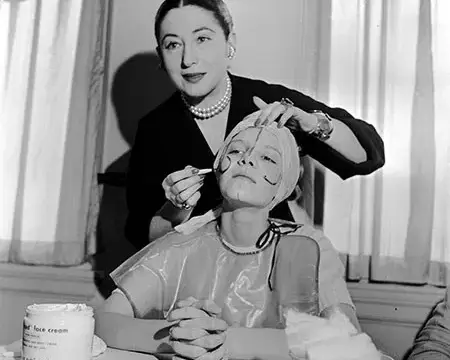
Her observation reflects a concern that existed long before modern skincare routines became popular. Early in her career, during her first professional work as a facialist in Australia, Helena Rubinstein encountered many clients whose skin had become severely dehydrated. She attributed much of this dryness to the harsh effects of soap combined with the region’s hot, dry climate.
Rather than treating dehydration as simply a cosmetic flaw, she focused on helping clients understand the condition of their skin. She introduced products designed to restore moisture and protect the skin’s natural balance.
What Traditional Beauty Rituals Understand About Skin Balance
A similar understanding appears across older cultural traditions.
In systems such as Ayurveda, oils have long been used on the skin to maintain its health and resilience. Princess Esra of the Asaf Jah Dynasty of Hyderabad recalls in her memoir that soap was often considered too drying and was not traditionally relied upon for cleansing the skin. Instead, natural oils were used to maintain softness and protect the skin’s balance.
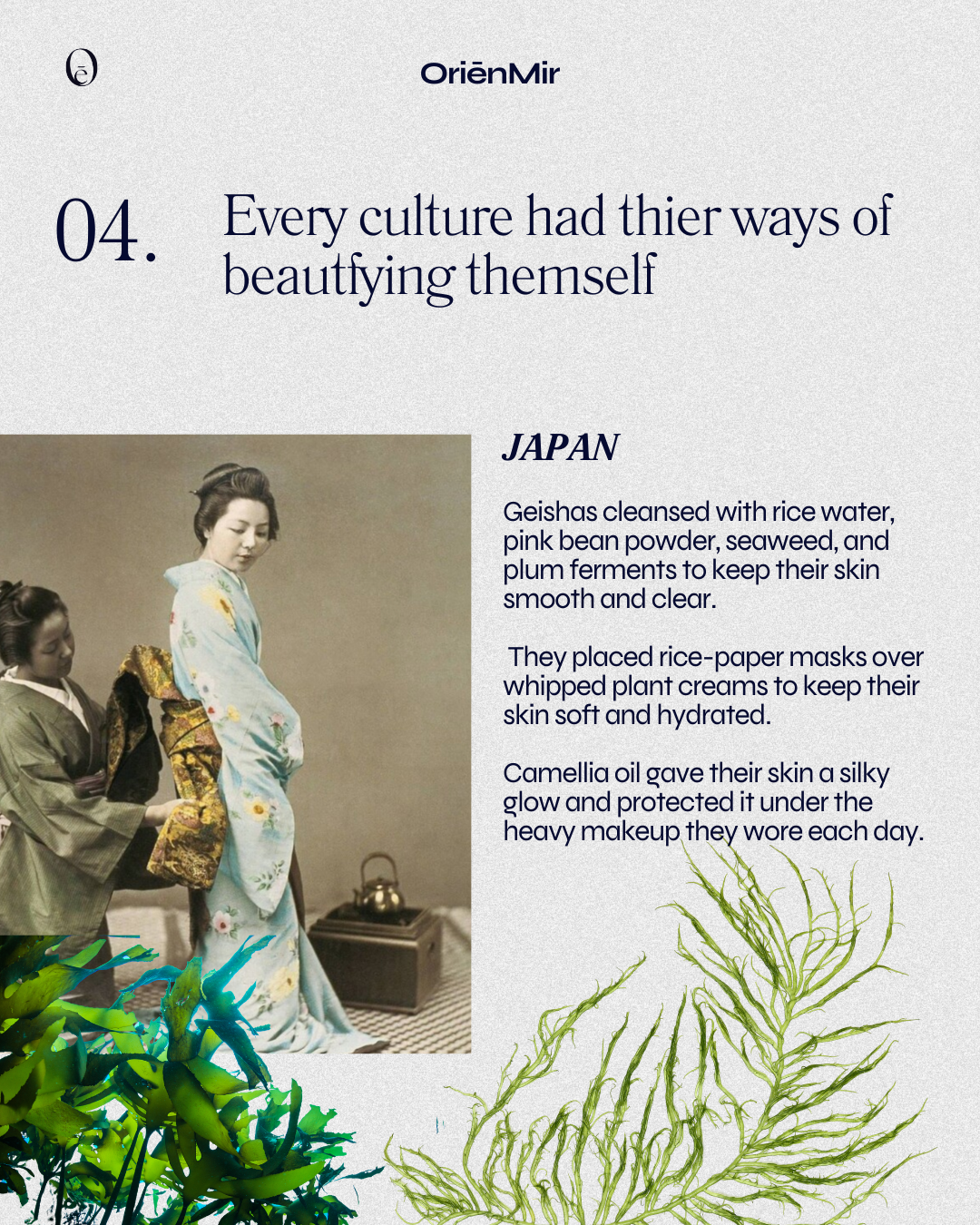
In Japan, geishas cleansed with rice water, pink bean powder, seaweed, and fermented plum extracts to keep their skin smooth and luminous.
Rhassoul clay from the Atlas Mountains in Morocco was used to gently cleanse the skin while preserving its softness.
Across these very different cultures, early cosmetic science, Ayurvedic tradition, Japanese beauty rituals, and North African bathing practices, a similar idea quietly appears.
The skin does not thrive when its natural oils are repeatedly stripped away.
It thrives when its moisture and protective balance are preserved.
When too much oil is removed, the skin often responds in ways that seem confusing. It may begin producing more oil to replace what has been lost. The result can feel strange: skin that feels both tight and oily at the same time.
Dry, yet shiny.
In this way, the issue is not only dryness.
It is an imbalance.
Across much of history, cleansing was not approached with the intensity that is common today. Water held symbolic and restorative meaning in many cultures. Baths were often built near natural springs or sacred waters, places where washing was connected with rest, warmth, and restoration.
Cleansing was part of caring for the body.
The beauty of the skin was seen as something that emerged from the ritual itself, not something separate from it.
The Skin Barrier: Why Your Skin Needs Its Natural Oils
Modern cleansing habits often reverse this idea. The focus falls almost entirely on removal: removing oil, removing residue, removing bacteria, removing dead skin.
The skin becomes something to control rather than something to cooperate with.
Yet biologically, the skin itself has not changed for thousands of years. It behaves less like a simple surface and more like a small ecosystem.
Within its outer layers live oils, enzymes, water-binding compounds, and beneficial microbes. These elements work together continuously to keep the skin balanced. They help maintain moisture. They regulate acidity. They protect the skin from the outside world.
When this ecosystem is disturbed too often, the skin must spend more energy repairing itself.
Oils must be rebuilt.
Enzymes must rebalance.
Microbes must stabilise again.
This rebuilding does not happen instantly. The skin renews itself slowly, layer by layer. If disruption occurs again before recovery is complete, the process simply begins again.
What Happens When Skin Is Stripped Too Often
Over time, this cycle can leave the skin looking tired earlier than expected. The barrier may not hold water as well. The skin may appear duller or more fragile.
Many people see these changes as simple ageing.
Yet sometimes they reflect something quieter.
A loss of rhythm.
Like many living systems, the skin works best when it has stability and when the ingredients used on it work with its natural processes. Its cycles unfold over days and weeks, not hours. When these cycles are constantly interrupted by repeated washing or overly harsh products, the skin must keep correcting itself.
Modern skincare often promises improvement through new formulas and new treatments. Yet long-lasting health in living systems often comes from something simpler.
Consistency.
Consistency allows the skin barrier to remain intact long enough for its natural systems to function properly. Oils replenish naturally. Hydration remains steady. The skin no longer needs to defend itself from the very practices meant to care for it.
Why Healthy Skin Depends on Rhythm, Not Intensity
Seen this way, the question around cleansing begins to change.
The issue is rarely whether the skin should be cleaned. Cleansing has always been part of caring for the skin.
The deeper question is whether the skin is being asked to start over too often.
Modern life exposes the skin to pollution, changing climates, and artificial indoor environments. Cleansing can help remove these stresses.
But when cleansing becomes too frequent or too harsh, the skin may begin to show quiet signs that its balance is fading.
Dryness.
Sensitivity.
Uneven texture.
Fine dehydration lines.
A feeling that the skin is no longer quite as comfortable as it once was.
These changes are rarely dramatic.
They are small signals.
Signals that the skin may not need more intensity.
But more rhythm.
When cleansing supports the skin rather than disrupting it, something subtle often returns.
Not perfection.
But steadiness.
And over time, steadiness becomes the quiet foundation of healthy, long-lasting skin.