Why Your Makeup Looks Patchy and Cakey
When the Surface Is No Longer Even
There is a particular kind of frustration that doesn’t announce itself. Makeup is applied in the same way it always has been, in the same light, with the same intention. Yet something has shifted. The surface no longer receives it in the same way. It gathers slightly at the sides of the nose, settles into areas that once felt smooth, or seems to hover rather than merge. What used to feel effortless now feels uncertain, as though the skin and the makeup are no longer in quiet agreement.
This change rarely happens all at once. It arrives gradually, often alongside other small signals that are easy to overlook. Skin feels a little drier than expected, even when nothing has changed on the surface. There may be a faint tightness after washing, or a dullness that no amount of light seems to soften. The rhythm of renewal, which once moved unnoticed, becomes less even. Dead cells no longer shed as cleanly, and the surface begins to hold onto what should have been released. What appears as texture is not simply visual. It is structural, a subtle unevenness that alters how the skin interacts with everything placed upon it.
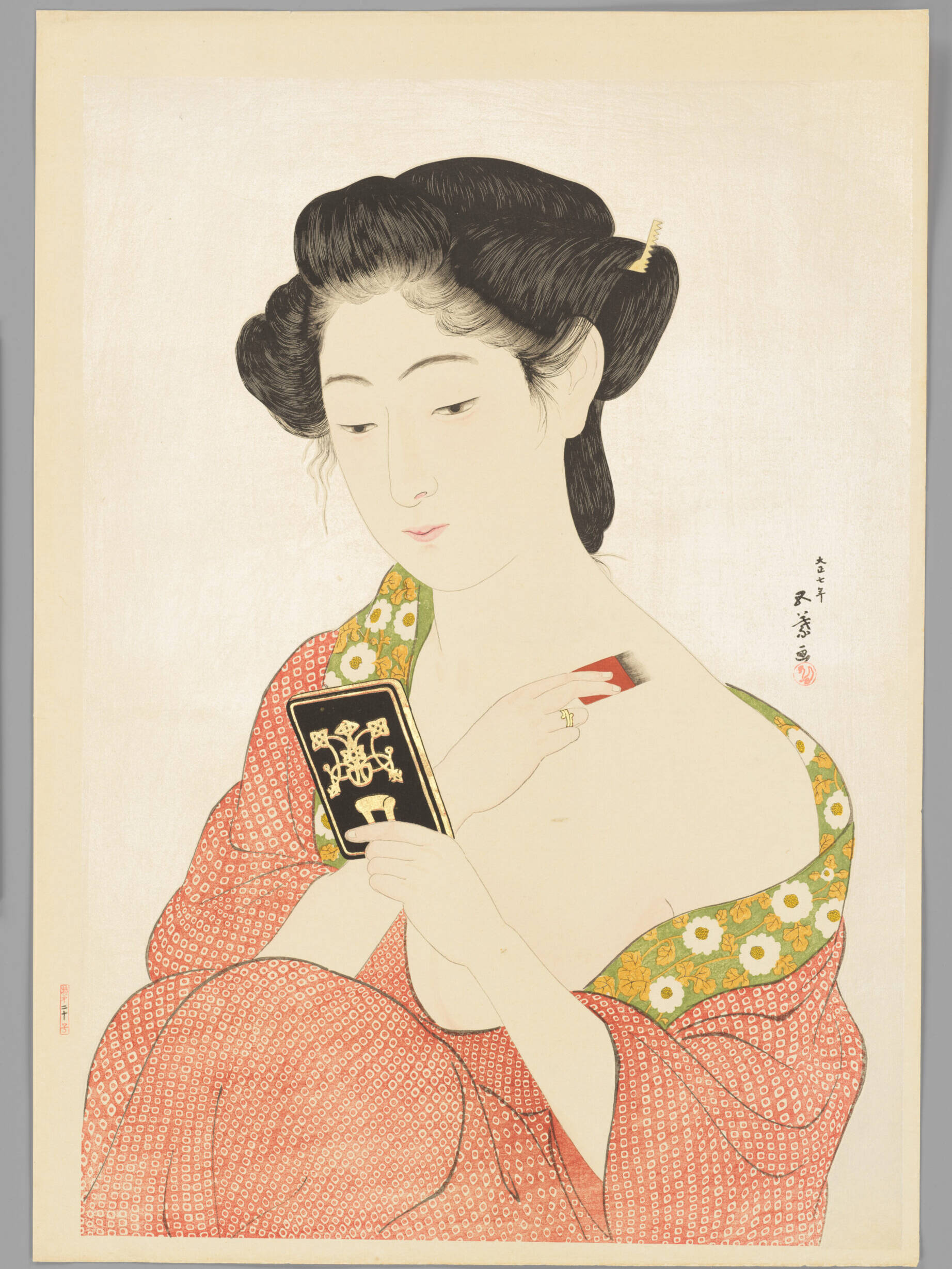
Ancient beauty routines of adornment demonstrated that the relationship between skin and what touched it was understood differently. They recognised that the condition of the surface determined everything that followed, how the body felt, how it appeared, and how it carried light.
Modern beauty often moves in the opposite direction. When makeup stops sitting well, the instinct is to adjust what is visible. A different foundation, a heavier layer, a more mattifying finish. There is a quiet assumption that the answer lies in addition. Yet the skin does not respond to layering in the way we might expect.
When Texture Changes Everything
When its surface is uneven, whether through dehydration, accumulated keratin, or a weakened barrier, it does not provide a stable ground. Instead, it interrupts. Product catches where the surface is raised, slips where it is lacking cohesion, and settles into places that have lost flexibility. What appears as a makeup issue is often the skin expressing its current state, not a failure of the product itself.
There is also the matter of light, which is less often spoken about but always present. Smooth skin reflects light in a more unified way, giving the impression of clarity and calm.
Rough or uneven skin scatters it, creating a flatter, more fatigued appearance. This is not simply aesthetic; it is a reflection of how the outermost layer is functioning. When hydration is held within the skin, the surface becomes more supple and continuous. When it is lost, the surface tightens, and the irregularities become more pronounced. Makeup does not change this interaction. It sits within it.
The Misunderstanding of “Natural” Looking Make-Up
The idea of “natural-looking” makeup has become increasingly prominent, yet it is often misunderstood. It is spoken about as though it is achieved through restraint; fewer products, lighter application, softer finishes. But what it tends to reveal, quietly, is not minimalism but condition.
Skin that allows makeup to disappear into it is skin that is functioning with a certain coherence. The layers beneath the surface are holding water, maintaining structure, and supporting the outer barrier. In this state, makeup does not need to perform as heavily. It rests, rather than compensates.
This is where the distinction becomes clearer. The desire for smoother, more settled makeup is not only about technique or selection. It is about the state of the surface receiving it.
When the outer layer is compromised, whether through dehydration, disrupted oil balance, or irregular shedding, it cannot hold product evenly. It loses the quiet stability that allows everything placed on it to appear integrated. The result is not dramatic, but it is persistent. A sense that something is slightly off, even if it cannot be named directly.
There is, perhaps, a different way to understand this shift. Not as a problem to correct, but as a signal to notice. Skin changes over time, influenced by environment, stress, internal rhythms, and the pace of daily life. It reflects these changes in subtle ways before they become more visible.
The way makeup sits is often one of the first indicators. It reveals texture, hydration, and balance with a kind of honesty that is difficult to obscure.
And so the focus starts to move away from the makeup and back to the skin itself. Not as a job to fix, but as something to understand.
What makeup looks like on the skin depends on how the skin is doing underneath. Smoothness is not just about putting more on top. It comes from the skin functioning as it should. Sometimes the biggest change is not the makeup at all, but the skin underneath it.